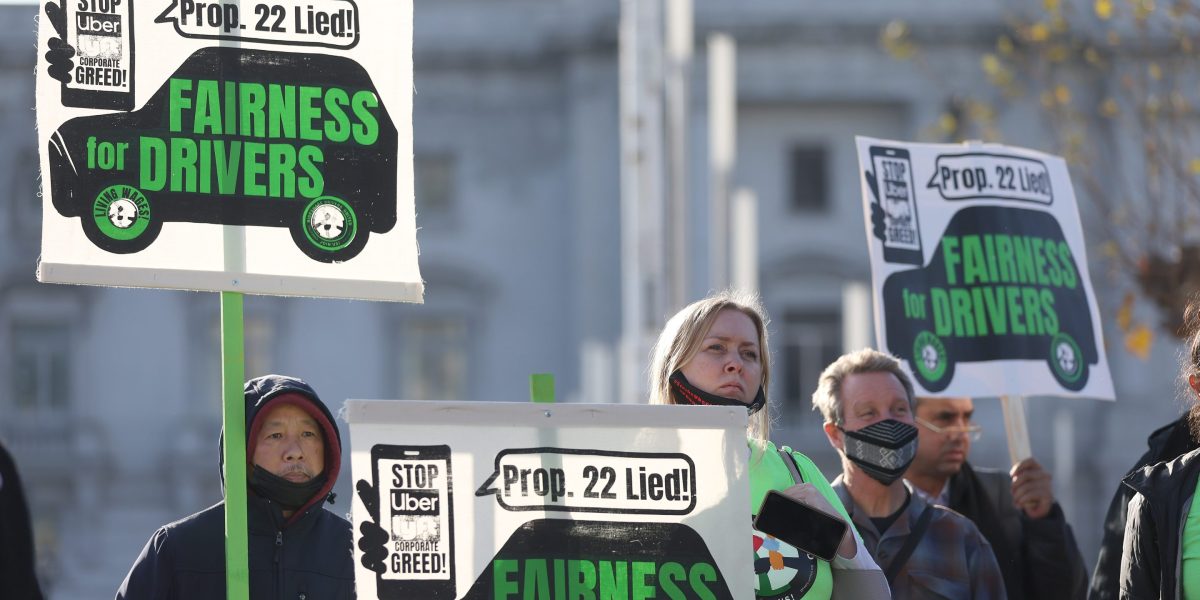
The gig economy, once hailed for its flexibility and convenience, is now facing a critical juncture. A recent opinion by the California State Supreme Court against Uber has the potential to spark significant change in the treatment of gig workers, pushing for a fairer deal for those who have long been marginalized in this sector. The court’s decision to allow a special lawsuit against Uber from drivers seeking coverage for work-related expenses sheds light on the ongoing struggle for the soul of the gig economy in California and beyond.
At the heart of this legal battle is Erik Adolph, an UberEats driver who represents the countless gig workers fighting for fair compensation in a system that often exploits their status as independent contractors. Companies like Uber have long used this classification to avoid providing essential benefits such as minimum wage, health insurance, and expense reimbursements. Adolph’s lawsuit seeks to challenge this model and hold companies accountable for their treatment of gig workers.
The classification of workers as independent contractors is not a new tactic employed solely by companies like Uber. It is supported by laws such as California’s Proposition 22, which allows gig-based apps to define their workers as independent contractors rather than employees. Despite a recent affirmation of the validity of Proposition 22 by a California appeals court, the debate over worker classification in the gig economy continues to rage on.
The lawsuit against Uber leverages the Private Attorney General Act (PAGA), a unique California law that empowers workers to sue for employment law violations on behalf of the state. This law not only gives workers a platform to fight for their rights but also encourages a more equitable employment landscape by holding companies accountable for their treatment of workers.
The recent ruling by the California Supreme Court diverges from a 2022 U.S. Supreme Court decision involving Viking River Cruises, which allowed companies to channel individual PAGA claims into private arbitration. This decision could potentially open the floodgates for more large-scale lawsuits against employers, challenging the status quo and pushing for greater accountability in the gig economy.
While some, including Uber’s lawyer, argue that the California ruling infringes upon federal law enforcing the validity of arbitration agreements, others see it as a necessary step towards ensuring fairness for gig workers. The prevalence of arbitration agreements in the private sector often deters workers from pursuing individual claims, highlighting the need for a more equitable approach to resolving disputes in the gig economy.
The California Supreme Court’s ruling represents a ray of hope for those advocating for labor rights in the gig economy. It has the potential to compel companies to rethink their reliance on arbitration and prioritize the rights and well-being of their workers. If other states follow California’s lead, companies may need to adjust their strategies to accommodate increased expenses related to worker benefits and potential legal challenges.
Ultimately, the legal battle over worker classification in the gig economy serves as a stark reminder of the broader challenges facing this sector. The balance between innovation and fairness, the responsibility for worker benefits, and the definition of “employees” are all critical issues that must be addressed to ensure a more just and equitable future for gig workers.
As we navigate the intersection of technological advancement and worker rights, it is essential that we prioritize justice and equity for all workers. The gig economy must evolve to better serve the needs of its workers, and the California Supreme Court’s ruling is a crucial step in that direction. While the road ahead may be challenging, one thing is clear: change is necessary, and we all have a role to play in shaping a more equitable future for gig workers.